
From AL6 to AL1 in 6 Weeks! | By The Roots Student Story
Updated: Jul 25
When parents hear that one of our students went from AL6 to AL1 in just six weeks, their first question is usually:
"How is that possible?"
It's a fair question.
At By The Roots in Bukit Timah Plaza, we want to share this story because it illustrates something important:
Note: Shared with the kind permission of the student and her parent.
Where She Started
She arrived at By The Roots midway through Primary 4.
Her most recent school assessment had returned a score of 26 out of 50.
She had worked hard. She had done her homework.
But something wasn't clicking.
What struck us in that first session wasn't the score.
It was how quickly she gave up when a question felt unfamiliar.
She had learned to cope — by skipping what she didn't understand.
What the Diagnosis Revealed
At By The Roots, we begin every student journey with careful assessment.
We found:
• Shaky multiplication from Primary 3 — especially the 6, 7, 8 and 9 times tables
• Inability to handle equivalent fractions or mixed numbers (core Primary 4 topics)
• Avoidance of any problem sum that involved fractions
She had been taught the steps. She could sometimes follow them.
But she had never truly understood why they worked.
The Approach: Going Backwards to Go Forwards
Rather than drilling Primary 4 practice papers, we started further back.
Weeks 1–2: Multiplication Facts and Primary 3 Fractions
We addressed two foundations simultaneously:
• Multiplication fact fluency (6–9 times tables) through games and pattern work — not rote drill

• Primary 3 fraction concepts: what a fraction means, what the whole is, comparing like fractions, unit fractions — using physical fraction tiles, not just diagrams

The goal wasn't speed. It was genuine understanding of what these concepts mean.
Weeks 3–4: Primary 4 Fractions
With the Primary 3 foundation solid, Primary 4 content began to make sense.
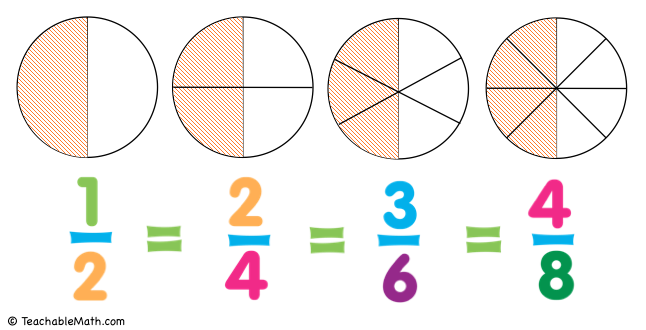
• Equivalent fractions — understanding why 2/4 = 1/2, not just executing the procedure
• Mixed numbers and improper fractions, using fraction tiles to build the concept physically first
• Adding and subtracting fractions with unlike denominators — only introduced after equivalence was understood
Each concept introduced concretely, then pictorially with bar models, then as equations.
Week 5: Fractions in Problem Sums
We focused on:
• Identifying "the whole" in each problem context
• Checking whether answers were reasonable
Week 6: Mixed Assessment Practice
Not for pressure. For confirmation.
Her understanding transferred to school-style questions — including multi-step problem sums she would previously have skipped entirely.
The Result
AL6 to AL1. Six weeks.
But what changed most wasn't the number.
It was her instinct when she saw a difficult question.
She stopped skipping. She started drawing.
What This Story Tells Us
Most Primary 3 and 4 students who struggle are not behind because they lack ability.
They are behind because:
• Later content was introduced before that gap was closed
• Avoidance became a habit — skipping hard questions rather than understanding them
When the right gap is found and closed in the right order, progress happens faster than parents expect.
This is as true at Primary 4 as it is at Primary 6.
How We Help at By The Roots
Our approach begins with understanding, not speed.
• We identify the root cause of the struggle
• We close gaps systematically, starting from where the breakdown actually began
• We rebuild confidence alongside competence
This is what makes the difference.
Final Thoughts
If your child is struggling with mathematics, the question isn't:
"Are they capable?"
It's:
Ready to find out what's holding your child back? Book a free trial lesson at By The Roots in Bukit Timah Plaza. 👉 Contact us to arrange a trial class today!


Comments