
Why Is My Child Struggling With Math? | By The Roots
Updated: Jul 25
If you've ever heard your child say:
"I'm just bad at math."
or
"I don't get it."
you're certainly not alone.
As parents, it can be worrying to watch your child struggle with mathematics despite putting in effort. Many families in Singapore find themselves asking the same question:
Why is my child struggling with math?
The good news is that in most cases, the answer is not because a child lacks ability.
After decades of teaching primary school mathematics, we've found that students usually struggle for reasons that are entirely fixable.
At By The Roots, our math tuition centre in Bukit Timah Plaza, we regularly work with students who have lost confidence in math—only to discover that the real problem isn't intelligence at all.
Let's explore what's actually going on.
Myth: Some Children Are Simply "Bad at Math"
One of the biggest misconceptions about mathematics is that success depends primarily on natural talent.
Parents often compare siblings or classmates and conclude that some children are simply "math people" while others are not.
In reality, mathematics is far more similar to learning a language than many people realise.
Students who appear strong often have:
• Confidence from early success
• Effective problem-solving habits
• Good teaching experiences
Students who struggle are often missing one or more of these ingredients.
The encouraging news is that these skills can be developed.
The Real Reason #1: Weak Foundations
Imagine trying to build the second floor of a house before the ground floor is complete.
That's what mathematics feels like for many children.
Singapore primary school math is carefully structured. Every topic builds upon earlier concepts.
For example:
• Ratio depends on fractions
• Percentage depends on ratio
• Algebra depends on all of the above
When students have gaps in earlier topics, those gaps become larger over time.
A child may appear to be struggling with Primary 5 or Primary 6 math when the real issue started much earlier.
The Real Reason #2: Memorisation Without Understanding
Many students learn math by memorising steps.
For example: "When you see this type of question, do this."
While this may work temporarily, problems arise when the question changes slightly.
The student then feels lost because they never truly understood the underlying concept.
This is particularly common when preparing for PSLE mathematics, where non-routine problems require flexible thinking.
At By The Roots, we focus on helping students understand:
• Why a method works
• When to use it
• How different concepts connect
When understanding improves, confidence often follows naturally.
The Real Reason #3: Math Anxiety
Many children develop negative emotions around mathematics.
They may:
• Fear making mistakes
• Feel embarrassed in class
• Compare themselves with stronger peers
• Become anxious during tests
Over time, this creates a cycle:
Struggle → Anxiety → Avoidance → More Struggle
Breaking this cycle requires more than additional worksheets.
Children need:
• Encouragement
• Small successes
• A safe learning environment
• Teachers who build confidence
This is a key part of our philosophy at By The Roots.
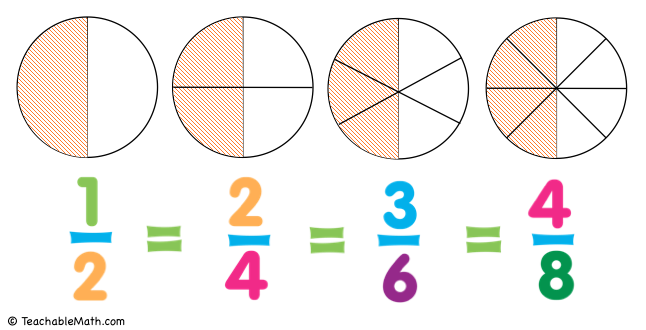
The Real Reason #4: Not Enough Visual Learning
Many mathematical concepts are abstract.
Children often benefit from seeing and touching ideas before working with numbers alone.

This is why our classes regularly incorporate:
• Manipulatives
• Games
• Visual models

These tools help students develop deeper understanding rather than relying on memorisation.
Signs Your Child May Need Additional Support
Some common warning signs include:
1. Frequently Forgetting Methods
Students who constantly forget procedures may never have understood them fully.
2. Avoiding Math Homework
Avoidance often signals frustration rather than laziness.
3. Difficulty Explaining Their Thinking
Strong understanding allows children to explain why they chose a particular method.
4. Large Gaps Between School Topics
Students who suddenly struggle when new topics are introduced may have foundational gaps.
5. Declining Confidence
Comments like "I'm bad at math" should never be ignored.
What Parents Can Do
Rather than immediately increasing practice papers, try asking:
• Can my child explain the concept?
• Does my child understand why the method works?
• Are there foundational gaps that need attention?
Focus on:
• Understanding before speed
• Confidence before perfection
• Thinking before memorisation
How We Help at By The Roots
At By The Roots, located in Bukit Timah Plaza, our mission is simple:
Help children truly understand mathematics.
Our lessons are designed by Michelle, an experienced educator with:
• 30 years in MOE
• Former GEP teaching experience
• Marshall Cavendish authorship
• A deep commitment to helping children learn through understanding
We use:
• Hands-on activities
• Visual representations
• Problem-solving discussions
• Conceptual teaching strategies
This approach has helped students achieve significant improvements, including moving from AL6 to AL1 in just six weeks.
Final Thoughts
If your child is struggling with math, remember:
Struggling does not mean incapable.
More often than not, the issue is:
• Limited conceptual understanding
• Low confidence
• Unhelpful learning habits
The good news is that all of these can be addressed.
With the right support, children can learn to understand, enjoy and succeed in mathematics.
Ready to Help Your Child Build Stronger Foundations? We offer a free trial lesson at our centre in Bukit Timah Plaza. 👉 Learn more about our programmes or contact us to arrange a trial class today!


Comments